
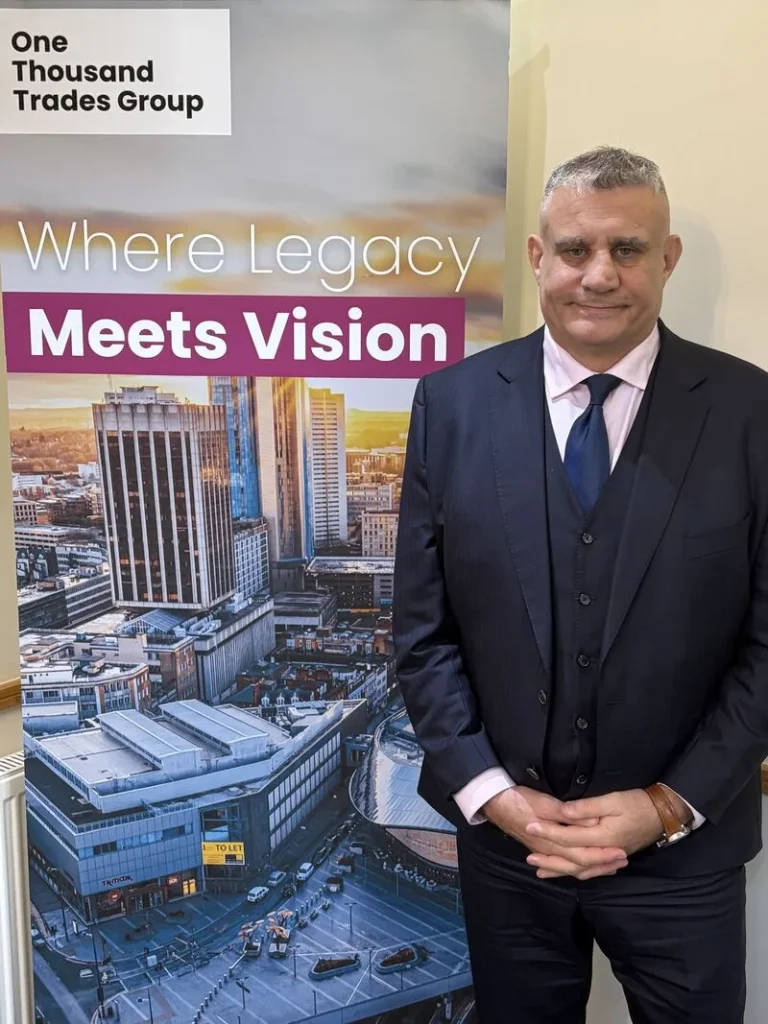
Paul Cadman on collective leadership, and why the most meaningful impact comes from teams where people want one another to succeed.
In leadership—across business, community work, and the civic life of Birmingham—I’ve learned that competition is often presented as the engine of progress. Yet the most meaningful impact comes from something far more powerful: building teams where people genuinely want one another to succeed. After the past few years, and particularly after navigating major surgery and recovery, this truth has become even clearer to me. Leadership is not about personal endurance; it is about collective strength.
When a team shifts from individual ambition to shared purpose, everything changes. Cultures move from coping to thriving. People stop protecting their own space and start elevating those around them. That shift has shaped every organisation I’ve led and every community project I’ve supported—from business teams to charity boards to the Innovation Awards.
How Birmingham shaped my view of collective leadership
- Our city’s character is built on collective resilience. Birmingham succeeds because people collaborate, challenge constructively, and lift one another. Whether in manufacturing, tech, creative industries, or the charity sector, progress here is rarely the work of a lone individual; it is the product of shared effort and shared ambition.
- My own work reflects this. From supporting Birmingham Youth Sports Academy (BYSA) to championing the Army Benevolent Fund, from backing creative projects like Nagasaki to celebrating excellence through the Innovation Awards, the constant thread has been the same: people flourish when they feel safe, supported, and trusted. The best outcomes come when colleagues are encouraged to step forward, not compete for space.
Recovery has only deepened this conviction. Stepping back forced me to rely on others, and in doing so, I saw the strength of teams who don’t just work together—they care for one another. That is leadership at its most human and its most effective.
Why this matters for modern leadership
When people stop looking over their shoulders and start reaching out their hands, psychological safety rises. Innovation follows. Teams become more courageous, more imaginative, and more committed to the mission. Leadership, then, is not about being the standout performer; it is about creating an environment where everyone feels capable of becoming one.
An organisation becomes truly formidable when its people are united by a shared commitment to collective achievement.
Paul first shared this post on LinkedIn. You can follow Paul on LinkedIn for more.